Immersion Probe
Probe is design for total or partial immersion into water or other liquids to create ultrasonic beams.
Features&Applications
Features
· Strong Pressure and Corrosion Resistance
· Excellent Acoustic Impedance in Water or other Liquids, 1/4 wavelength of matching layer can ensure maximum power outputs
· No Coupling Issues between Probe and Liquid
· Acoustic Beam can perform Spherical Focusing (F) or Line Focusing (CF), to increase ability of defect identifications
· Three types of performance probes can meet most of detection needs
· PL – Universal Series
· PH – Short Pulsing Series
· C – Composite Series
Applications
· Unfocused probes (planar) are used for general applications and penetrating thicker materials
· Point focused probe (spherical surface) is generally used to improve the sensitivity and signal-to-noise ratio of small flaw defection
· Line focused probe (cylindrical surface) is generally used for the detection of pipes and bars
· Online thickness measurement; Automatic scanning; Material analysis; Imaging system
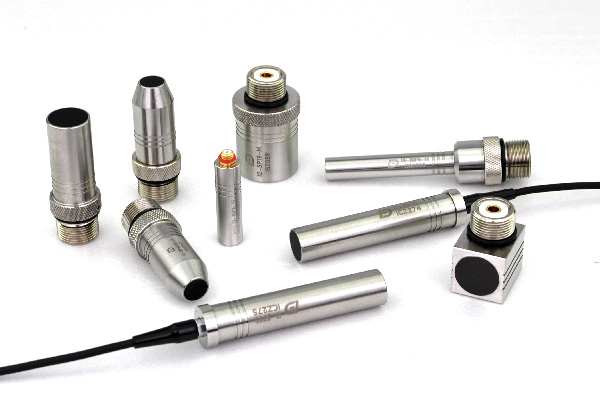
Specification and Model
Instruction:
1. Most water immersion probes working between – 10 ~ 55 ° C (14 ~ 131 ° f). If the temperature exceeds the limit, peeling will occur between components, resulting in permanent damage to the probe. Limit working temperature (customized) can reach -55 ~ 120 ° C (- 67 ~ 248 ° f).
2. Transducers should not be submerged for periods exceeding 8 hours. Allow 16 hours of dry time to ensure the life of the unit.
3. The focusing distance of the unfocused probe is about equal to its near-field length. Since the last maximum amplitude of the probe occurs at a distance equivalent to the near-field length, all probes cannot focus when it is greater than the near-field length.
4. At a given frequency and element size, the focal length of the probe is limited. The actual maximum amplitude of unfocused probe is about 0.6 times of the near-field length, and that of point focused probe is about 0.8 times of the near-field length, for line focused probe max amplitude may not correspond tothe nominal focusing. When the focus probe exceeds the above maximum but less than the near-field length, the increased sensitivity at the focus is not obvious.
5. For the problem of the long focus length transducer has a large offset in the center frequency near the focus point, please refer to the description on the probe test report.
European Standard l1
Top Mounting with 1.8 meter or 2.5 meter cable length, cable end with Lemo 01 (C9) Connector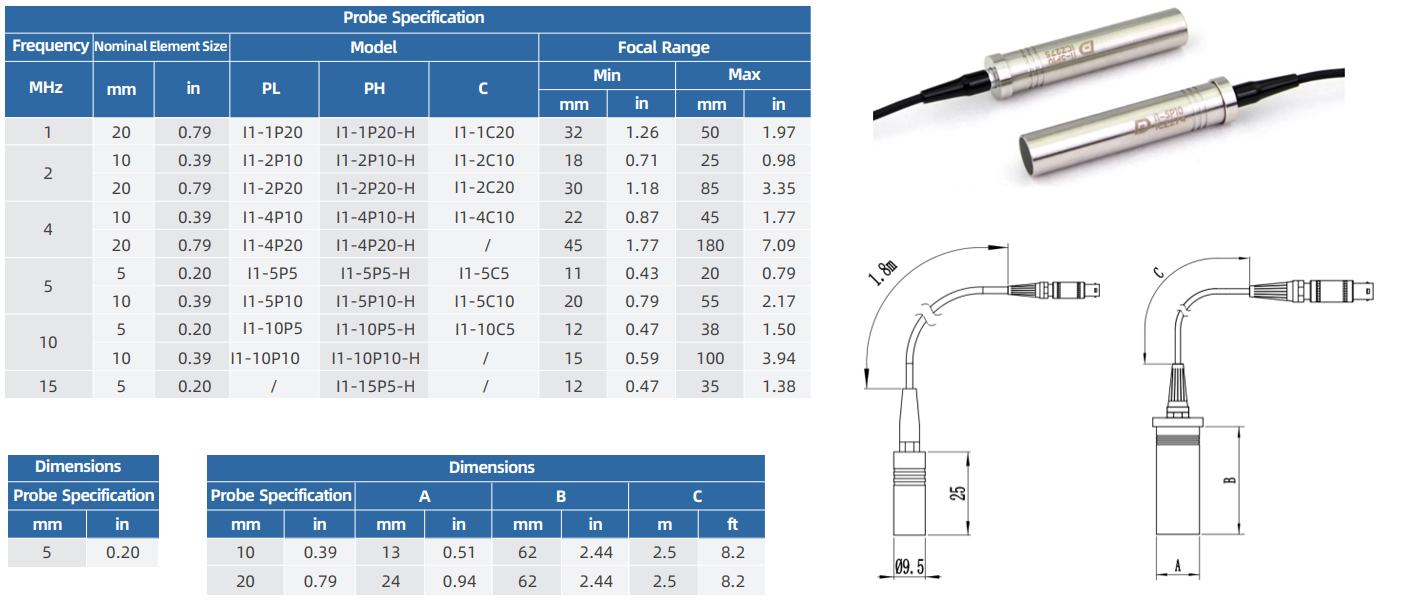
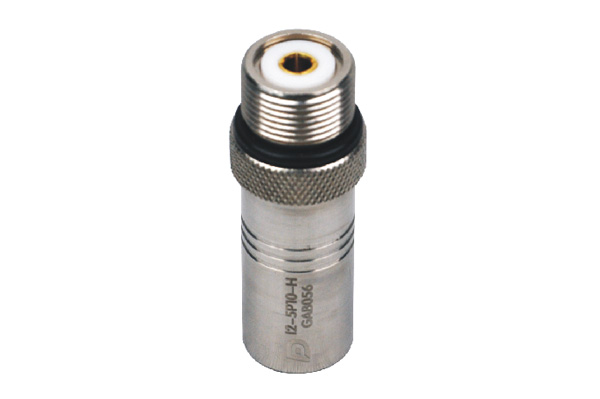
North American Standard l2
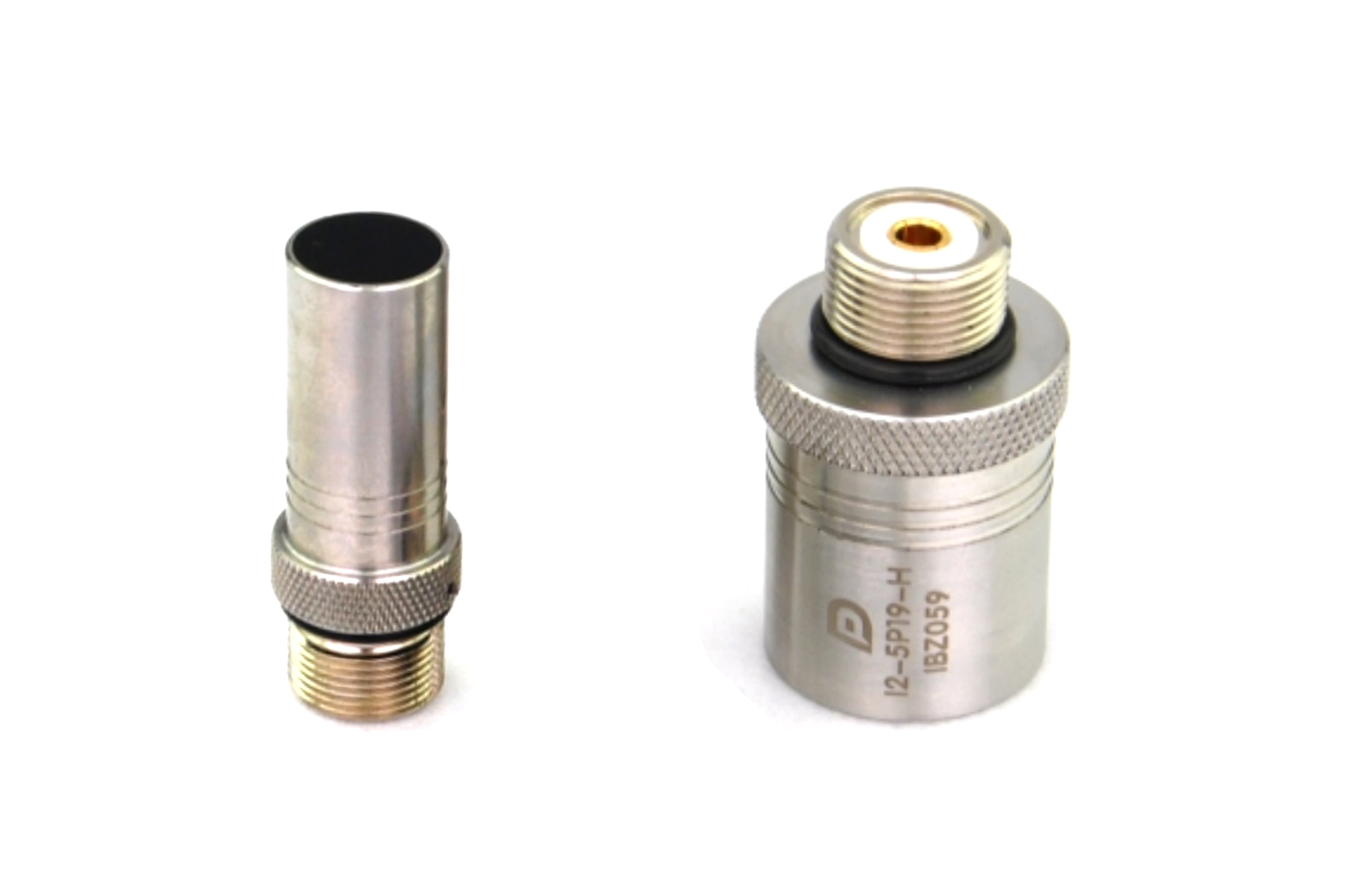
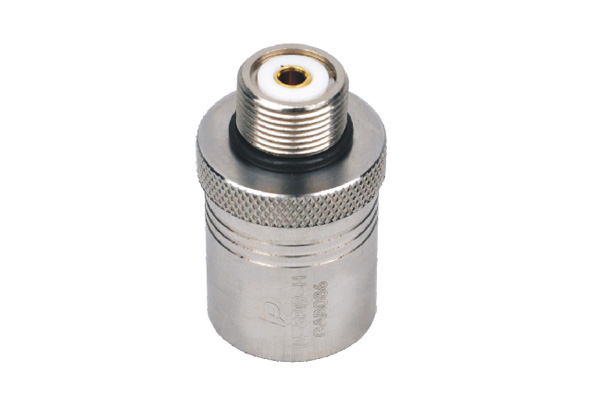
· Top Mounting UHF waterproof connector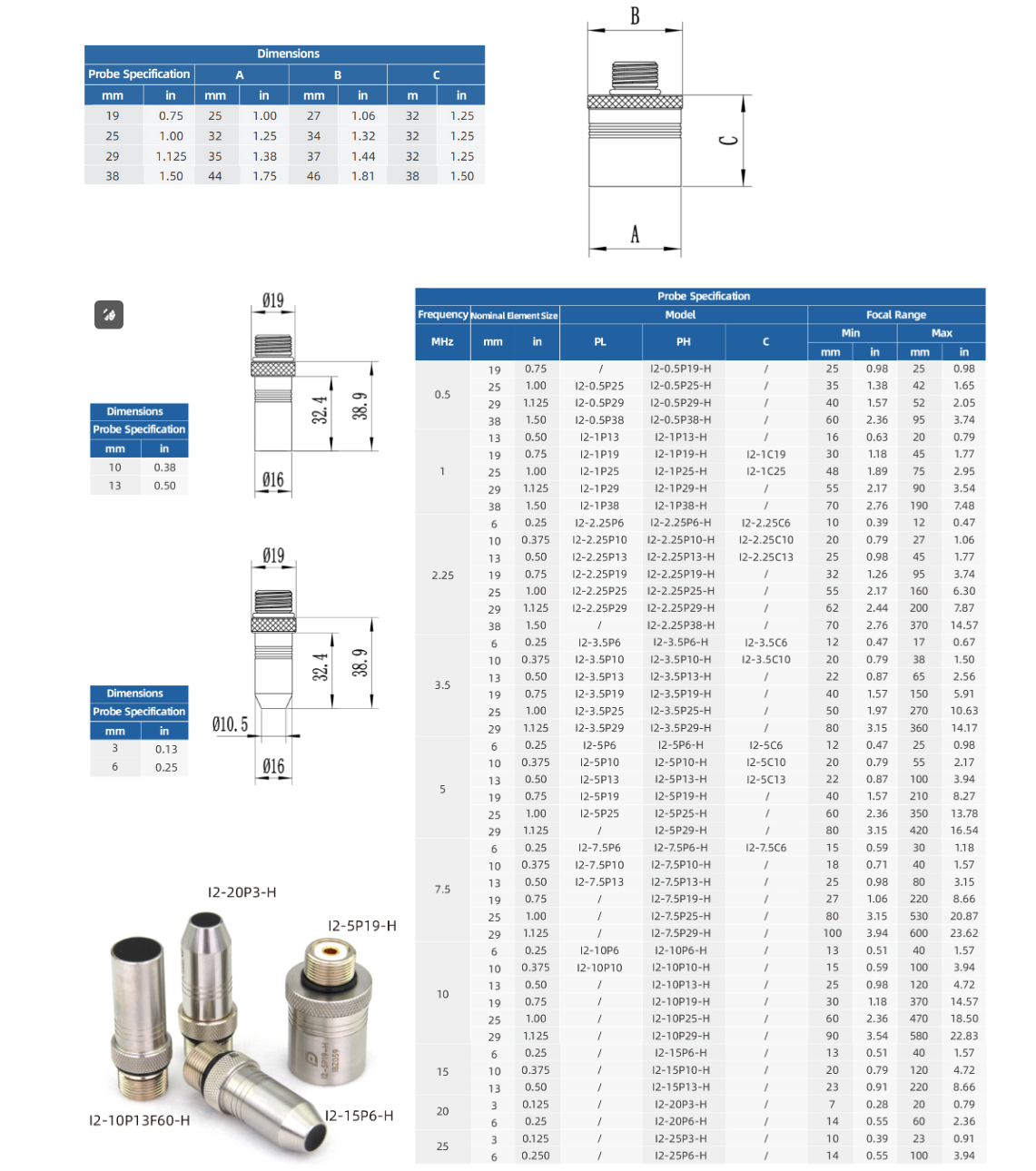
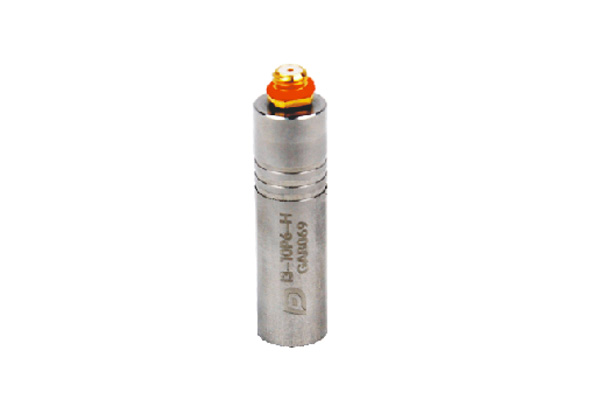
North American Standard l3
· 9.7mm (0.375in) Outer Diameter, suitable for limited detection environment
· Top Mounting Microdot (L5) Non-waterproof Connector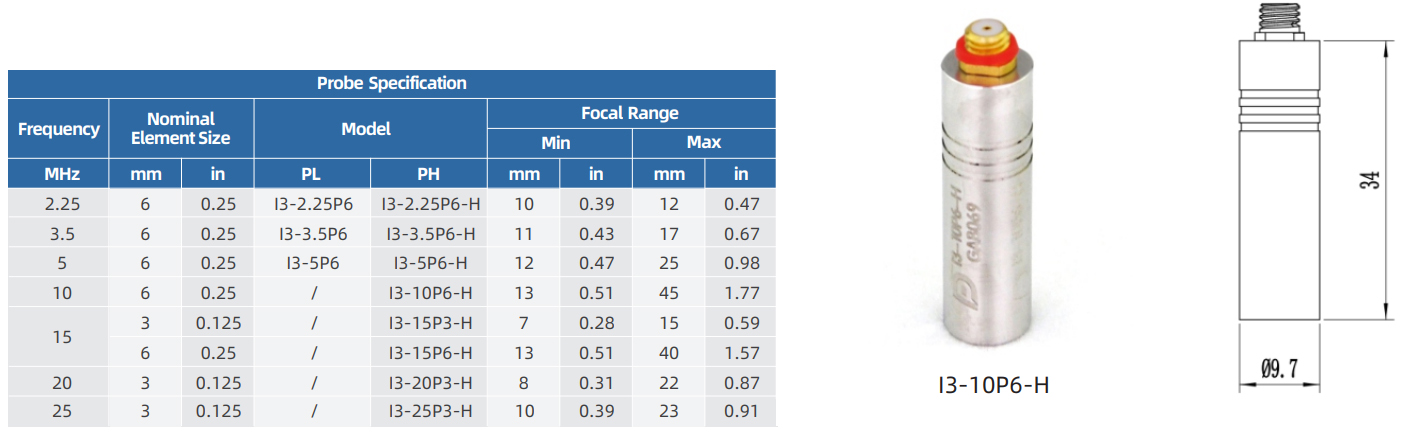
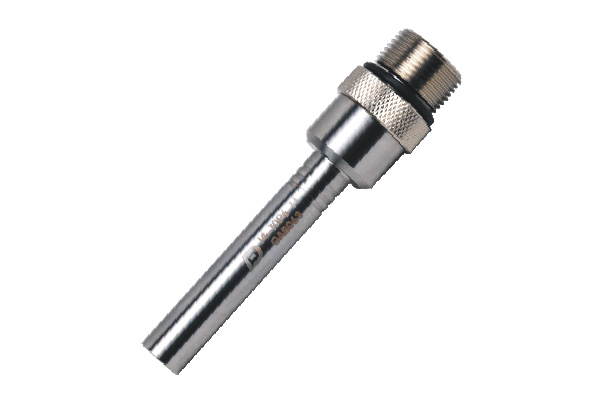
North American Standard l4
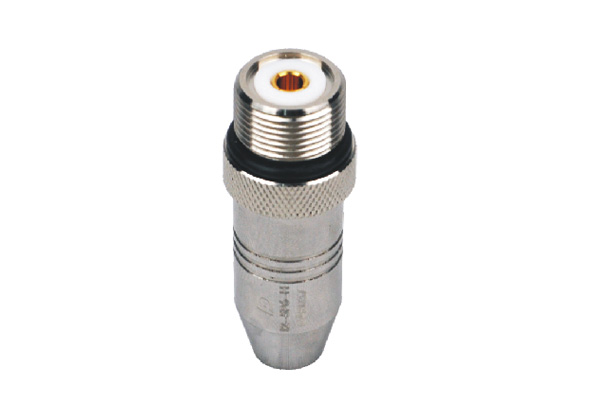
· 9.4mm (0.37in) Outer Diameter, 51mm (2in) Length, suitable for hard to reach detection areas
· Top Mounting UHF waterproof Connector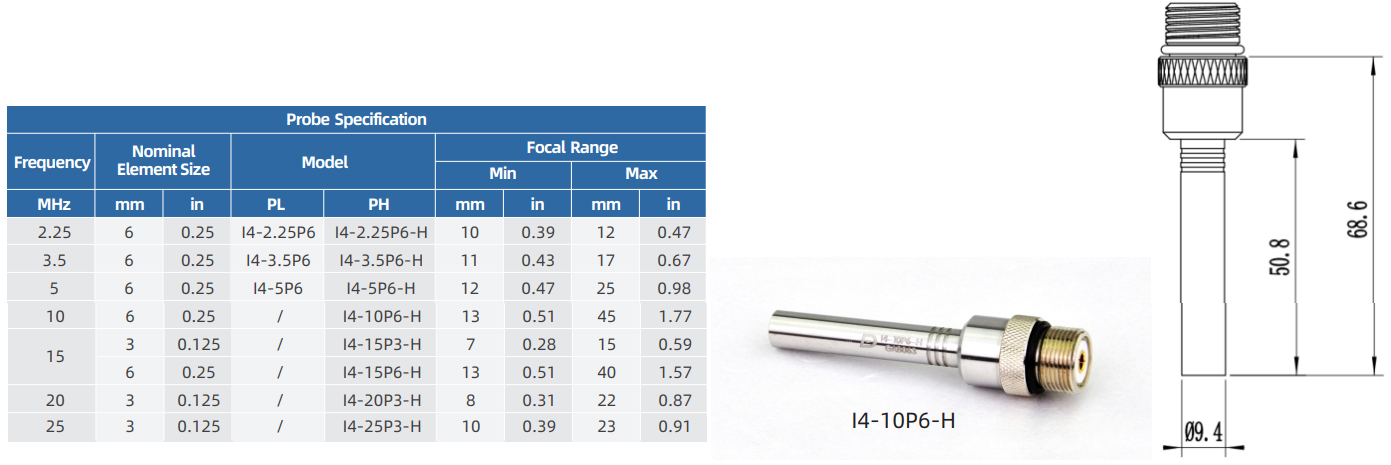
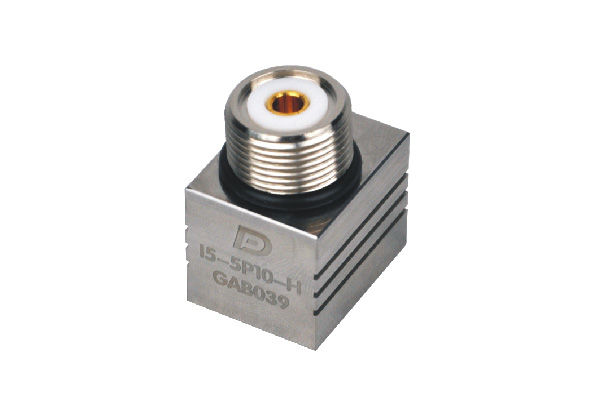
North American Standard l5
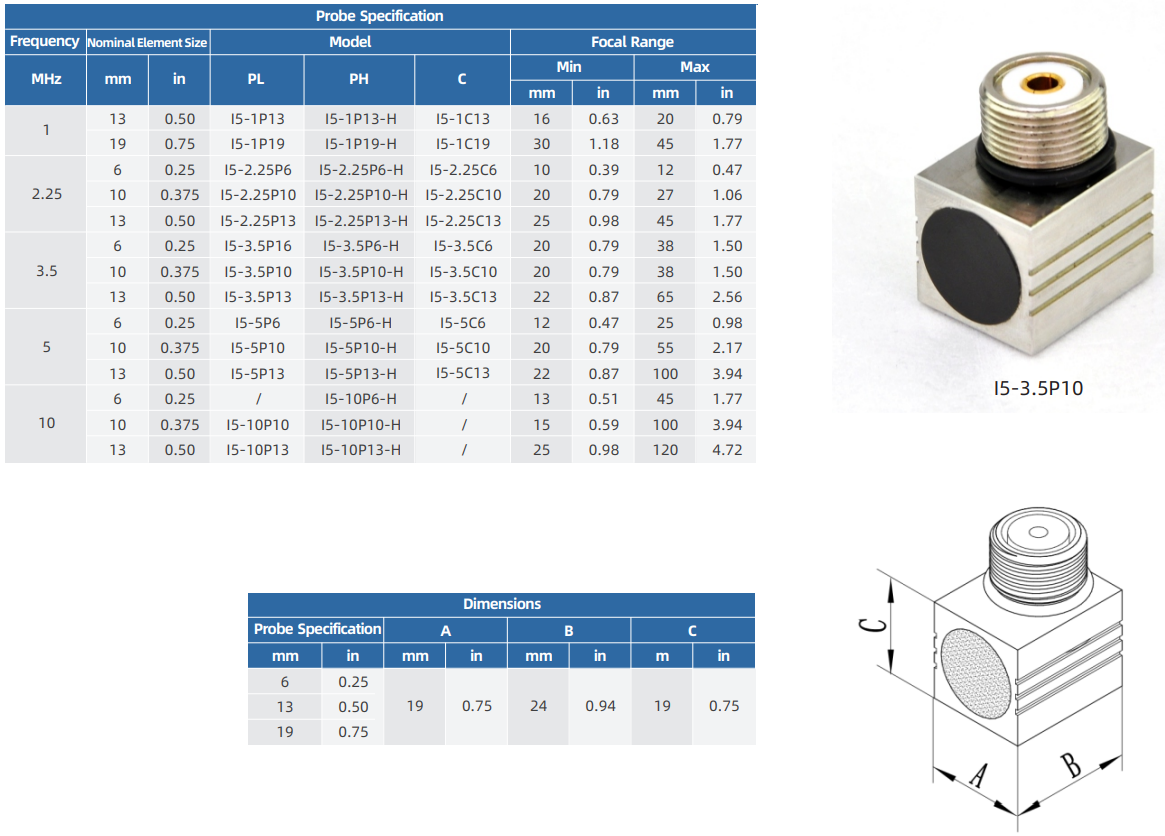
· Cuboid profile, Sound Wave Direction and Connector into a 90 degree, for specific application environment
· Top Mounting UHF waterproof Connector